Whitefield Real Estate Investment Guide 2026
Whitefield is one of Bangalore’s most-searched property markets, and for good reason. This Whitefield real estate investment guide explains why the corridor keeps attracting buyers, what returns to expect, and how to position a purchase such as a luxury apartment for the best long-term outcome.
A sound Whitefield real estate investment rests on three pillars: deep tenant demand from the IT belt, steady capital appreciation, and improving infrastructure led by the metro. Together they make this one of the more dependable micro-markets in the city for a patient buyer.
Our team has tracked rents, prices and supply across the corridor to frame this Whitefield real estate investment guide. Use it to judge the opportunity, the risks and the right entry point for your goals.
Why Whitefield Real Estate Investment Works
The core of any Whitefield real estate investment is jobs. ITPL, EPIP and the surrounding parks anchor a vast base of IT employees, project teams and global capability centres, which creates a constant, renewing pool of tenants and buyers on the corridor.
That employment density translates into low vacancy and reliable rent collection, the two foundations of a steady Whitefield real estate investment. Where jobs cluster, housing demand follows, and Whitefield has clustered jobs for two decades.
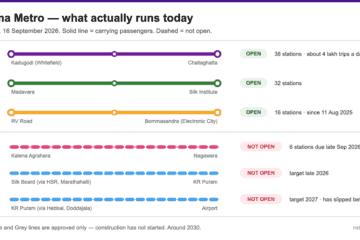
The metro extension has added a second engine, pulling demand outward and lifting values along the Whitefield-Hoskote stretch where newer luxury projects are launching.
| Metric | Value |
|---|---|
| Rental Yield | 3-3.5% |
| Appreciation | 8-12% pa |
| Occupancy | High |
| Tenant Base | IT, Corporate |
Whitefield Real Estate Investment: Rental Returns
On rent, a Whitefield real estate investment typically yields 3 to 3.5 percent gross. A 2.5 to 3 BHK leases for roughly Rs 35,000 to Rs 60,000 a month, with furnished premium homes commanding the upper end of that range.
Corporate leases are a particular strength of a Whitefield real estate investment, since companies pay on time, maintain the home and stay longer, which reduces churn and protects cash flow through the year.
Our Brigade Granada rental yield guide works through the numbers for a specific luxury project on this corridor.
Whitefield Real Estate Investment: Appreciation
Appreciation is where a Whitefield real estate investment does its heavy lifting. Capital values along the corridor have risen roughly 8 to 12 percent annually over three years, supported by the metro and continued tech hiring.
For most buyers, the growth in the asset value dwarfs the annual rent, which is why the investment is best understood as a capital-appreciation play with rent covering carrying costs over a long hold.
Infrastructure still in the pipeline, including road widening and the STRR interchange, should support further appreciation through 2028.
Whitefield Real Estate Investment: The Risks
No honest Whitefield real estate investment guide ignores the risks. The main one is a wave of simultaneous supply, as several large projects may complete in a similar window and briefly soften rents and occupancy as inventory floods in.
A second risk to any Whitefield real estate investment is a prolonged slowdown in tech hiring, given how concentrated the tenant base is in IT. The third is traffic, which can cap demand in the worst-connected pockets of the corridor.
Choosing a metro-linked, low-density project mitigates the last two, which is why location within Whitefield matters as much as the decision to invest here at all.
Whitefield Real Estate Investment: Picking the Project
Within a Whitefield real estate investment, project selection is decisive. Favour a credible developer, proximity to the metro and tech parks, strong amenities and a sensible carpet-area efficiency for the price band.
A luxury project such as Brigade Granada illustrates the template: a trusted builder, a five-minute metro link, 80 percent open space and a large clubhouse. These attributes protect both rent and resale in a Whitefield real estate investment.
For the full detail on that project, see our Brigade Granada buyer guide.
Whitefield Real Estate Investment for NRIs
For NRIs, a Whitefield real estate investment is attractive because the corporate tenant base and trusted developers keep management overhead low. Professional managers can handle leasing and upkeep with minimal owner involvement.
A rupee-denominated rental income also provides a natural hedge for NRIs planning a future return, adding to the appeal of a Whitefield real estate investment beyond the headline yield and appreciation figures.
Selecting a branded project further simplifies remote ownership and protects resale liquidity.
Whitefield Real Estate Investment: Holding Period
Because the case rests on appreciation, the holding period is the key lever in a Whitefield real estate investment. A buyer who can hold seven to ten years rides out supply gluts and rate cycles and typically exits well ahead.
The strongest demand for a resale usually appears once a community is fully built and amenities are live, so timing an exit to that window maximises the return on a Whitefield real estate investment.
A short, forced sale near possession is the one outcome a patient investor should plan to avoid.
Whitefield Real Estate Investment: Our Verdict
Our verdict is that a Whitefield real estate investment remains one of Bangalore’s more dependable choices for a patient buyer, blending reliable rent, healthy appreciation and an improving infrastructure pipeline.
The keys are project selection and horizon. Choose a metro-linked, branded, low-density home and hold it through the cycle, and a Whitefield real estate investment should reward you well.
For a specific, fully-analysed option, pair this guide with our Brigade Granada review.
The Whitefield Growth Story So Far
It helps to understand how the corridor reached this point. Two decades ago Whitefield was a sleepy outpost; the arrival of ITPL and the wider tech expansion turned it into one of the country’s densest employment hubs, and housing demand followed the jobs in a steady, self-reinforcing cycle that continues today.
Each wave of office development pulled in more residents, which drew schools, hospitals, malls and restaurants, which in turn made the area more attractive to the next wave of employers. That virtuous loop is the underlying reason values have compounded so reliably over the years.
The metro is the latest chapter, and arguably the most important. By giving residents a fast, traffic-proof link to the rest of the city, it has removed the single biggest objection buyers once had to the area and pushed demand outward toward Hoskote, where land is more available and new launches cluster.
Reading the Supply Pipeline
A disciplined buyer studies supply as carefully as demand. The corridor has several large launches at different stages, and a cluster of completions within a narrow window can briefly soften rents and lengthen the time it takes to find a tenant, even in a fundamentally strong market.
The way to manage this is to favour differentiated projects that stand out when supply is plentiful. A low-density, branded community with strong amenities competes far better in a crowded market than a generic tower offering nothing the building next door does not also offer.
It also pays to think about your own timing. Buying early in a launch, before a wave of completions, and holding through the absorption period typically positions you to sell or re-let into a tighter, more favourable market on the other side.
Financing and Tax Considerations
Leverage shapes the real return on the corridor. Because banks fund up to 80 percent of a purchase, your own capital controls a much larger asset, so even a modest yield combined with appreciation can produce a strong return on the equity you actually deploy.
Tax treatment adds to the case for end-users and investors alike. Principal repayment qualifies under Section 80C, interest under Section 24, and a let property allows a further set of deductions, all of which lower the effective carrying cost of the home over time.
Stress-test the numbers before you commit, though. Model your cash flow against an interest rate a point or two above today’s, and confirm you can comfortably carry the property through a vacancy or a rate spike without strain.
Whitefield Real Estate Investment FAQs
What yield does Whitefield real estate investment offer?
How much does property appreciate?
Is it good for NRIs?
What are the main risks?
How long should I hold?
Which project should I choose?
Related Reading
– Brigade Granada full project guide
– Brigade Granada rental yield
A Practical Action Plan for Buyers
Turn the analysis into steps. Begin by fixing a clear budget that includes stamp duty, registration, GST and the corpus fund, not just the headline price, so you know your true ceiling before you start shortlisting projects on the corridor.
Next, shortlist three projects and compare them on the same standardised metrics: carpet area, distance to the metro and tech parks, amenity scale, developer reputation and possession date. Scoring them on one sheet removes emotion and surfaces the genuine front-runner quickly.
Then do the legwork. Visit each site at the time you would actually commute, verify every RERA registration on the official portal, and have a lawyer confirm the title and approvals before you pay anything beyond a refundable token.
Finally, commit with a long horizon in mind. The corridor rewards patience, so buy only what you can comfortably hold through a full cycle, and let appreciation and rising rents do their work over the years rather than chasing a quick gain.
In summary, a Whitefield real estate investment combines reliable rent, strong appreciation and an improving infrastructure story. Pick a metro-linked, branded, low-density project, hold it patiently through the cycle, and the corridor rewards disciplined buyers and NRIs alike.