Devanahalli Real Estate Guide 2026: Prices, Growth & Metro
Devanahalli real estate has gone from a quiet airport satellite to one of Bangalore’s most talked-about growth corridors. If you are weighing a home or an investment here, this guide gives you the ground reality, not the hype.
Our team tracks the Devanahalli real estate market across price trends, infrastructure timelines, and rental demand. Below is what a serious buyer needs to know before committing to North Bangalore in 2026.
Why Devanahalli Real Estate Is Moving
The single biggest driver is Kempegowda International Airport. Proximity to a major airport reshapes a region, drawing hotels, business parks, aerospace and hardware clusters, and the jobs that follow.
Devanahalli real estate sits right on this engine. The Aerospace SEZ, the IT investment region, and a growing band of business parks have turned farmland into a future-facing suburb in barely a decade.
Jobs create housing demand, and housing demand lifts prices. That simple chain is why the corridor keeps appearing on investor shortlists across the city.
Price Trends in the Belt
Prices tell the clearest story. In pockets like Shettigere, rates have moved from roughly Rs 5,500 per sq ft in 2021 to around Rs 9,500 to 10,500 per sq ft in 2026.
That is strong double-digit annual growth, and it reflects real demand rather than speculation alone. The belt has rewarded early entrants, though the easy gains of the earliest years have narrowed.
Our assessment is that the belt can still deliver 8% to 10% annual appreciation over a five-year-plus hold, led by infrastructure delivery. For project-specific numbers, see our Godrej MSR City Phase 2 price breakdown.
| Year | Rate/sqft | Trend |
|---|---|---|
| 2021 | Rs 5.5k | Early |
| 2026 | Rs 9.5-10.5k | Mature |
| Outlook | 8-10% pa | 5yr hold |
Connectivity: Road, Metro and STRR
Connectivity is the backbone of Devanahalli real estate. NH-44, the Bellary Road corridor, links the belt to the city core, and the elevated airport expressway keeps travel times manageable despite the distance.
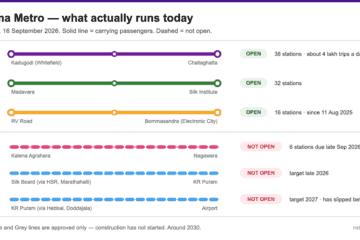
Two projects will reshape commute friction. The airport metro line will bring rail access deep into the corridor, and the Satellite Town Ring Road, the STRR, will knit Devanahalli into the wider metropolitan region.
Each of these milestones tends to lift Devanahalli real estate values as it nears completion. Buyers who position ahead of the metro stations historically capture the steepest appreciation.
Social Infrastructure and Daily Life
Schools, hospitals, and retail are catching up fast. Reputed international schools, multi-speciality hospitals, and business hotels already serve the corridor, anchored by the airport ecosystem.
The honest picture is that some pockets still feel semi-developed. Devanahalli real estate is an emerging belt, so early residents trade some daily convenience for long-term upside as the neighbourhood fills in.
Large townships help bridge this gap by building convenience inside their gates. The amenity depth of projects like Godrej MSR City Phase 2 is partly a response to a maturing, not yet mature, neighbourhood.
Rental Demand and Yields
Rental demand here is tied to the airport, the cargo and aerospace clusters, hospitality staff, and aviation professionals who want short commutes. That tenant base is steady and growing.
Gross rental yields in Devanahalli real estate typically sit in a healthy range for Bangalore, and they should firm up as more jobs land nearby. Investors should still underwrite on appreciation first, rent second.
Who Should Buy in Devanahalli
Devanahalli real estate suits long-horizon investors, airport-linked professionals, and end-users who value space and greenery over a central address. NRIs also favour the corridor for its branded launches and clear growth narrative.
It suits patient buyers less well if you need a fully built-out neighbourhood today or a quick flip. The reward here is for those who hold through the infrastructure delivery cycle.
If that profile fits you, the corridor’s branded townships are the safest way in. Compare options through our Godrej MSR City Phase 2 listing and the broader investment analysis.
Risks to Weigh Before You Buy
No corridor is risk-free. Supply is rising as builders rush in, so oversupply in pockets could cap short-term price growth. Infrastructure timelines can also slip, delaying the very catalysts that justify a purchase.
Mitigate this by buying a RERA-registered project from a credible developer, holding for five years or more, and checking absorption in your chosen micro-market. Done right, Devanahalli real estate remains one of Bangalore’s strongest long-term stories.
How Devanahalli Compares to Other North Bangalore Pockets
Within North Bangalore, the airport corridor competes with belts like Hennur, Thanisandra, Yelahanka, and Bagalur. Each has its own trade-off between price, maturity, and growth runway.
Yelahanka and Hennur are more built-out and command higher entry prices, but their steepest appreciation is largely behind them. Devanahalli real estate sits earlier on that curve, offering a lower entry and a longer runway tied directly to the airport economy.
Bagalur, anchored by the Aerospace Park, is a close cousin and often moves in step with Devanahalli. For buyers chasing the cleanest growth narrative rather than instant convenience, the deeper airport corridor usually wins on long-term math.
The right pick depends on your horizon. If you can hold through the metro and STRR delivery, the corridor’s discount-to-future-value is the most compelling in the sub-region.
Property Types You Can Buy Here
The market here spans the full ladder, from villa plots and gated plotted developments to mid-rise apartments and large high-rise townships. Each suits a different buyer and budget.
Plots appeal to investors who want maximum land leverage and the flexibility to build later. Apartments and townships suit end-users and rental investors who want a ready lifestyle, security, and managed maintenance from day one.
Branded high-rise townships have become the default choice for first-time corridor buyers because they bundle amenities, security, and resale liquidity. Godrej MSR City Phase 2 is a clear example of that township model on the corridor.
Devanahalli Real Estate FAQs
Is Devanahalli real estate a good investment in 2026?
For a five-year-plus horizon, yes. Airport-led job growth, the metro, and the STRR support 8% to 10% annual appreciation. It rewards patience over quick flips.
How much have prices risen?
In pockets like Shettigere, rates moved from about Rs 5,500 per sq ft in 2021 to roughly Rs 9,500 to 10,500 per sq ft in 2026, strong double-digit annual growth.
What drives demand here?
Kempegowda International Airport, the Aerospace SEZ, the IT investment region, and a growing band of business parks create the jobs that fuel housing demand across the corridor.
Is the area fully developed yet?
Not entirely. Some pockets still feel semi-developed. Early residents trade a little daily convenience for long-term upside as schools, retail, and transit fill in.
What are the main risks?
Rising supply could cap short-term gains, and infrastructure timelines can slip. Buy RERA-registered projects from credible builders and hold for five years or more.
Is Devanahalli good for rentals?
Yes. Airport, cargo, aerospace, and hospitality jobs create steady tenant demand. Yields are healthy for Bangalore and should firm up as more employment lands nearby.