North Bangalore Real Estate 2026: Land Up 35-40% Since 2022

If you have been tracking property in the city over the last few years, you already know the conversation has shifted decisively northward. The north Bangalore real estate story is no longer a future bet that planners talk about in seminars; it is the single most active investment corridor in the city right now. Anchored by the Kempegowda International Airport (KIA) at Devanahalli, this belt has quietly become the place where land bankers, end-users and institutional money are all parking themselves at the same time.
When people ask where the next decade of appreciation will come from, the honest answer is that this corridor is where most of the verifiable momentum already sits.
This guide is written for buyers who want specifics rather than slogans. We will walk through what actually defines the corridor, the employment and infrastructure drivers behind it, a micro-market comparison, real price and appreciation trends, the plots-versus-apartments debate, the infrastructure pipeline, the best pockets to consider, and an honest list of risks.
North bangalore real estate rewards people who do their homework, and this article is meant to be exactly that. Wherever it makes sense, we point to a representative project such as Arvind Orchards Devanahalli so you can see how the theory maps to a real on-ground option.
What Defines the North Bangalore Corridor
The first thing to understand is that the north is not one homogeneous place. It is a corridor that fans out from the airport at Devanahalli and pulls in a string of micro-markets along the way. Broadly, the property in the north belt covers Devanahalli, Hebbal, Yelahanka, Bagalur, Doddaballapur, Thanisandra and Jakkur.
Each of these has a slightly different personality, price point and buyer profile, but they are knitted together by the same gravitational pull: the airport and the employment zones around it.
Geographically, the corridor runs along the Bellary Road (NH 44) spine and increasingly along the proposed Satellite Town Ring Road (STRR) and peripheral connectors. What makes this corridor distinct from the older south and east pockets is that it still has developable land at the plot level.
In a city where most central nodes are saturated, this belt offers the relatively rare combination of open land, planned infrastructure and a genuine jobs engine. That is the core reason north bangalore real estate keeps appearing at the top of analyst growth lists year after year.
The Growth Drivers Behind the Boom
No corridor appreciates without a reason, and the north Bangalore real estate surge is built on an unusually thick stack of demand drivers. The headline is jobs. The KIADB Aerospace Park, spread across roughly 847 acres, hosts heavyweight occupiers including HAL, DRDO and Boeing, turning Devanahalli into a genuine aerospace and defence cluster rather than just an airport suburb.
On top of that base, the manufacturing and technology investments have accelerated sharply. In August 2025, Foxconn committed to a large iPhone manufacturing facility in the belt with an investment of roughly 2.8 billion US dollars, a single decision that reshapes the demand math for the corridor. SAP has committed around Rs 1,960 crore to its presence in the region. Layered over these is the long-discussed Information Technology Investment Region (ITIR), which is expected to generate more than one million jobs over its full build-out.
When you put aerospace, electronics manufacturing and IT in the same catchment, you create exactly the kind of broad-based, multi-sector employment that sustains the north Bangalore market demand through economic cycles rather than just one boom.
Employment alone, however, does not move land prices; access does. That is where the infrastructure story reinforces the jobs story, which we cover in detail further down. The simple takeaway is that the corridor is being pushed by a self-reinforcing loop: jobs attract workers, workers need homes, homes need roads and metro, and better roads and metro then attract the next round of jobs.
The Micro-Markets, One by One
Because the corridor is so varied, choosing the right micro-market matters more than almost any other single decision. The table below compares the main pockets within the corridor’s belt on the factors most buyers care about. Use it as a starting filter, not as gospel, and always verify current rates on the ground before committing.
| Micro-Market | Best For | Indicative Profile | Distance to KIA |
|---|---|---|---|
| Devanahalli | Villa plots, land banking | Highest land-led upside, airport-adjacent | 5-15 min |
| Hebbal | Premium apartments, rentals | Mature, high-rental, well connected | 30-40 min |
| Yelahanka | End-use families, mid-segment | Established social infrastructure | 25-35 min |
| Bagalur | Plots and early-stage entry | Emerging, aerospace-adjacent | 15-20 min |
| Doddaballapur | Value plots, industrial proximity | Affordable, longer horizon play | 20-30 min |
| Thanisandra | IT professionals, apartments | Tech-corridor demand, rental depth | 35-45 min |
| Jakkur | Premium plots and villas | Aspirational, lake-side pockets | 30-40 min |
The pattern within the corridor is fairly consistent: the closer you sit to Devanahalli and the airport employment zones, the more your return is driven by land appreciation, while the southern pockets like Hebbal and Thanisandra behave more like conventional rental-yield apartment markets. Knowing which game you want to play is the first step.

Prices and How Fast They Have Moved
Now to the numbers most readers actually came for. Across north Bangalore real estate, land values appreciated by roughly 35 to 40 percent between 2022 and 2025, an exceptional run that comfortably outpaced most other parts of the city. Within that average, certain well-located pockets recorded appreciation of 15 to 20 percent per year, particularly land parcels sitting close to confirmed infrastructure and employment announcements.
On the rental side, the property in the north market currently offers gross rental yields in the region of 3.8 to 4.8 percent, which is healthy by Indian metro standards and reflects genuine occupier demand from the surrounding job clusters rather than speculative vacancy. For plotted developments, of course, the return profile is weighted toward capital appreciation rather than rent, so investors should be clear about which metric they are optimising. The broad message from the data is consistent: north bangalore real estate has been one of the few belts delivering both strong capital growth and respectable yields at the same time.
Plots vs Apartments in the Corridor
One of the most common questions in the corridor is whether to buy a plot or an apartment. The honest answer depends on your horizon and your appetite for active management. Plots, especially villa plots in the Devanahalli belt, have historically delivered the strongest capital appreciation in the corridor because land is the scarce, finite asset and the corridor still has the development runway. A plot also gives you flexibility: you can hold raw land, build a villa later, or exit when valuations peak.
Apartments, on the other hand, generate rental income from day one and are the better fit for buyers who want a hands-off, income-producing asset closer to mature nodes like Hebbal or Thanisandra. They appreciate too, but typically at a gentler pace than well-bought land. For most long-horizon investors in this corridor, a plotted villa development near the airport employment zones offers the cleaner appreciation story, which is precisely why projects like Arvind Orchards Devanahalli have drawn attention.
If you want a deeper breakdown of the format, our dedicated guide to villa plots in Devanahalli goes pocket by pocket. Either way, the north Bangalore market gives you both formats in the same corridor, which is rare.
The Infrastructure Pipeline
Infrastructure is the engine room of the corridor’s investment thesis, and the pipeline here is genuinely substantial rather than aspirational. The single biggest catalyst is connectivity to the airport and across the corridor. The table below lays out the major infrastructure components and their broad significance for the corridor.
| Infrastructure | What It Is | Impact on the Corridor | Status |
|---|---|---|---|
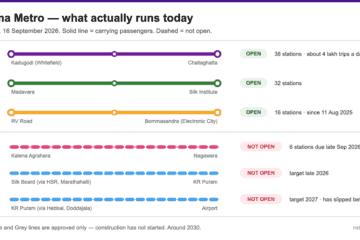
| Airport Metro (Blue Line) | Direct metro link to KIA | Mass transit to airport and job zones | Under construction |
| STRR Ring Road | Satellite Town Ring Road | Regional connectivity, decongestion | In progress |
| Airport Terminal 2 (T2) | Expanded airport capacity | Higher passenger and cargo throughput | Operational and expanding |
| KIADB Aerospace Park | 847-acre industrial cluster | Anchor employment for the belt | Operational, expanding |
| ITIR | IT Investment Region | 1M+ projected jobs over build-out | Planned / phased |
The metro Blue Line deserves special mention because it directly connects the city to the airport, and historically nothing lifts the belt values like confirmed rail connectivity. The STRR will do for road access what the metro does for transit, threading the corridor together and reducing the dependence on the single Bellary Road artery. Together with the continued expansion of airport Terminal 2 capacity, these projects mean the access bottleneck that once capped property in the north is steadily being engineered away, gradually opening up pockets that buyers once dismissed as too remote for serious, mainstream consideration.
Best Areas and Projects Right Now
Putting the demand and infrastructure picture together, the strongest risk-adjusted opportunities today cluster around Devanahalli and Bagalur for land-led plays, and around Hebbal, Yelahanka and Thanisandra for rental-led apartment plays. If your priority is capital appreciation over a five to ten year horizon, the airport-adjacent plotted segment is where the corridor has historically rewarded patient buyers most.
Within that segment, an orchard-themed villa-plot development such as Arvind Orchards Devanahalli by Arvind SmartSpaces is a representative example of the format buyers gravitate toward in this part of the corridor. The project offers plot sizes of 1200, 1500 and 2400 square feet, with pricing ranging from approximately Rs 72 lakh to Rs 1.9 crore depending on size and location within the layout.
It carries RERA registration PRM/KA/RERA/1250/303/PR/300124/006600, which is exactly the kind of regulatory hygiene serious buyers should insist on. Whether or not Arvind Orchards fits your specific budget, it illustrates the plot-size and price band that defines the premium villa-plot tier of the north bangalore real estate market right now.
The Risks, Stated Honestly
No responsible guide to this corridor would skip the downsides, and there are several you must weigh honestly. First, the corridor is large and uneven; not every layout marketed as a north Bangalore opportunity sits near confirmed infrastructure, and some peripheral parcels may take far longer to appreciate than the glossy brochures suggest. Distance to the airport and to job zones varies enormously across pockets, and that variance shows up directly in returns.
Second, infrastructure timelines in India routinely slip. The metro, STRR and ITIR are all real, but assuming completion on the most optimistic date is a common mistake in the north Bangalore market. Build slippage into your model. Third, title and approval risk is real in plotted land; you must independently verify the RERA registration and the title chain before any payment.
Fourth, liquidity in plots can be lower than in apartments during a downturn, so a forced sale may not fetch the appreciated value you see on paper. The market here has been generous, but generosity is not a guarantee, and entry price discipline matters as much here as anywhere.
What the Next Five Years Look Like
Looking ahead, the structural case for the corridor remains intact and arguably strengthening. The combination of a globally significant electronics manufacturing investment in Foxconn, a deepening aerospace cluster, large IT commitments and a metro line under construction is exactly the multi-engine demand base that tends to produce durable, rather than speculative, growth. As Terminal 2 capacity expands and the STRR knits the corridor together, the access constraints that historically held parts of property in the north back will continue to ease.
That said, the easy 35 to 40 percent appreciation phase of 2022 to 2025 reflected a once-in-a-cycle clustering of announcements. A sensible base case for the next phase is continued, healthy appreciation in well-located parcels rather than a repeat of that exceptional run across the board. Buyers who choose location carefully, verify documentation rigorously and hold for the medium to long term are the ones most likely to do well here.
The corridor remains, by most measures, the strongest growth story in the city, and disciplined entry into north Bangalore real estate continues to look like one of the better-supported property decisions available today, provided buyers respect the location selection and documentation discipline outlined throughout this guide.
Questions Buyers Ask
Is the north Bangalore market a good investment in 2026?
Which areas lead the corridor?
How much has the corridor appreciated recently?
Should I buy a plot or an apartment in the north Bangalore market?
What is a typical price for villa plots in this corridor?
What should I verify before buying in property in the north?
Disclaimer: This article is for general information only and does not constitute investment, legal or financial advice. All figures, including appreciation rates, rental yields, prices and RERA details, are indicative and subject to change. Property investment carries risk. Readers must independently verify RERA registration, title, approvals and current pricing before making any investment decision. NxtFootstep is not liable for decisions made on the basis of this content.